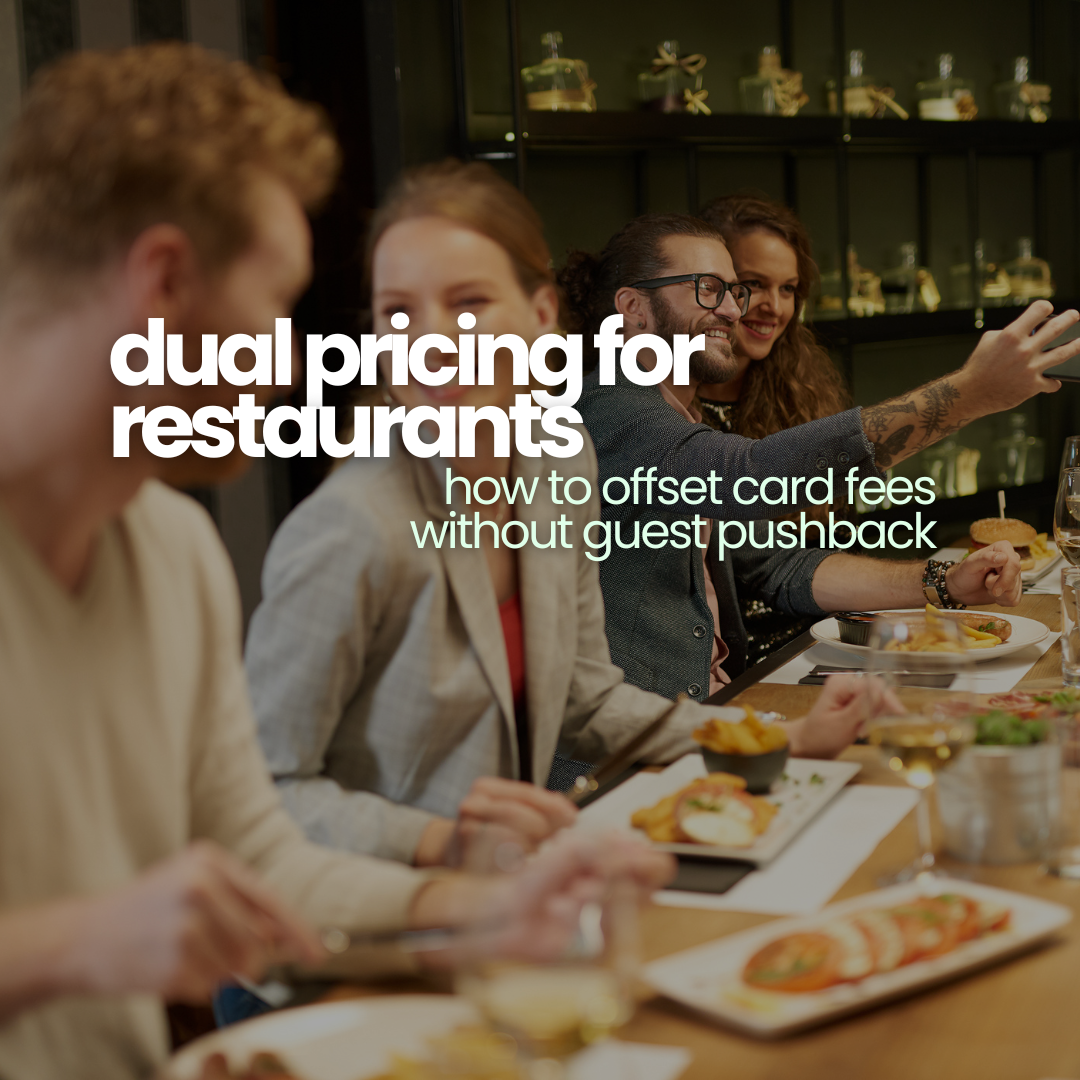
Credit card fees are one of those restaurant expenses that quietly grow until you finally look at your monthly statement and think, “Wait… that’s how much?”
And when your profit margin is already tight, even a “normal” fee percentage can feel like a direct hit to your bottom line. Many restaurants run on slim margins. Toast POS+1
That’s why more operators are turning to dual pricing as a way to protect margins without cutting quality, staff, or portions.
What dual pricing is (in plain English)
Dual pricing means you show two prices:
A lower cash price
A slightly higher card price
The POS automatically applies the right price based on how the guest pays. No awkward math. No manual upcharges.
This is different from randomly adding fees at the end. The whole point is transparency and consistency.
Why restaurants are paying attention right now
Between rising labor and food costs, restaurants are under pressure, and card fees are showing up on more receipts as operators look for relief. Payments Dive
Credit card processing fees can vary widely depending on the card, the network, and how a payment is accepted. The Motley Fool+1
Dual pricing is appealing because it gives you a predictable way to protect margin without “guessing” where to make cuts.
The biggest mistake operators make
The fastest way to create guest frustration is a surprise at checkout.
Dual pricing works best when:
pricing is clearly displayed
staff can explain it in one sentence
the POS applies it consistently
the receipt matches what the guest saw
If any part of that breaks, your front counter becomes the complaint department.
The setup checklist that keeps it smooth
Here’s a clean, practical setup flow:
1) Configure it in the POS the right way
Ensure the POS displays both prices clearly.
Confirm the card price triggers automatically based on tender type.
Verify receipts show the pricing correctly.
2) Update your signage and menus
Place signage at the register and entrance.
If you have printed menus, add a simple line near the bottom.
If you use digital menus, add a small footer.
Keep it short. The goal is clarity, not a paragraph.
3) Train staff with a one-line script
Your team does not need a speech. They need one sentence they can repeat consistently.
Example script:
“We offer a cash price and a card price. Cash saves you a little, card is slightly higher to cover processing.”
4) Test it during a slow shift
Run real transactions:
cash sale
debit sale
credit sale
refund on each tender type
Make sure:
the right price triggers every time
refunds return correctly
managers know what to do if a guest has questions
Guest experience: how to avoid pushback
Most pushback comes from confusion, not anger.
To keep it calm:
be consistent with wording
keep signage visible
avoid calling it a “fee”
don’t make guests feel like they did something wrong by paying with a card
If your staff treats it as normal, guests usually do too.
A quick note on margin reality
Restaurants commonly target labor-cost ranges that vary by concept, but many operators aim for a range that keeps the business sustainable.
The point is: when margins are tight, every recurring expense matters.
Want to see what this looks like inside Lifelong?
If you want a fast walkthrough of how dual pricing can run inside a restaurant POS without slowing down service, book a quick demo here.